Education Marketplace: Bridging Skill Gaps for Career Path Growth
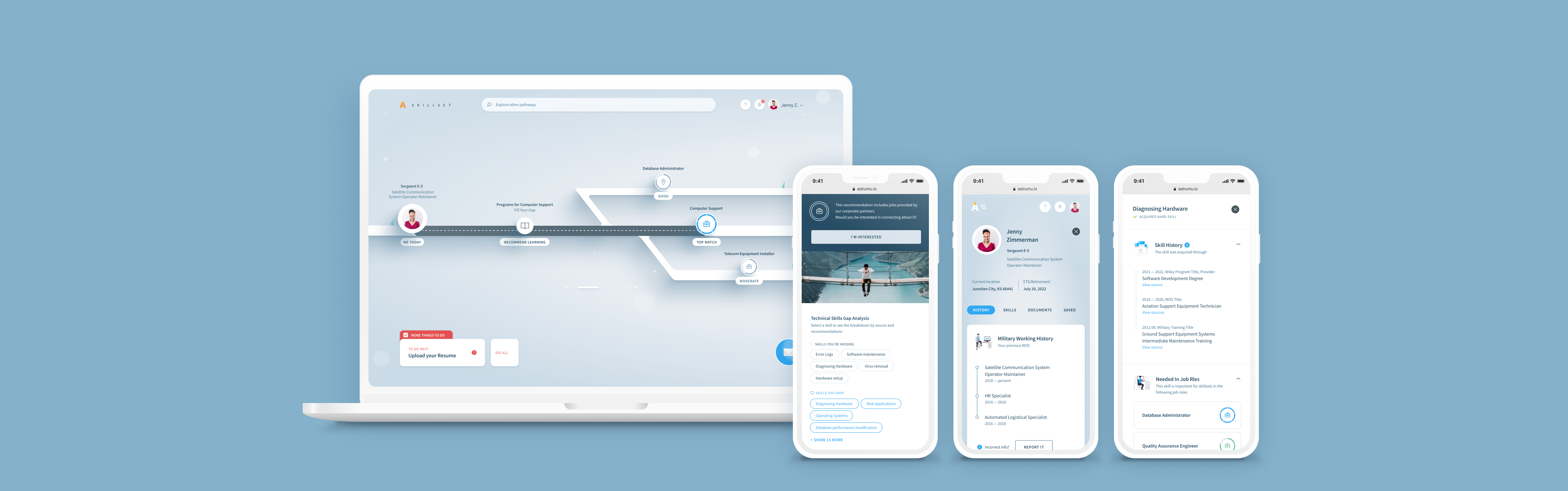
Transitioning soldiers struggle to translate their unique skills to civilian careers. To solve this problem, we designed an application called SkillSet to help them make better decisions about their civilian career through skills, personalized career path exploration and learning recommendations.
Scope
0-1 Product Desgn Responsive Web App & Mobile App Design
• Led the end-to-end design of the education marketplace and profile features; • Built a comprehensive skill system through the entire app across different features; • Collaborated with cross-functional teams to design and launch a product, attracting 10,000+ engaged pilot users; • Managed to balance user goals, business goals, technical limits, and stakeholders' needs. • Refine design details and use feedback to deliver seamless, high-standard user experiences.
Design Solution overview
Unlocking Civilian Career Paths from Military Experience
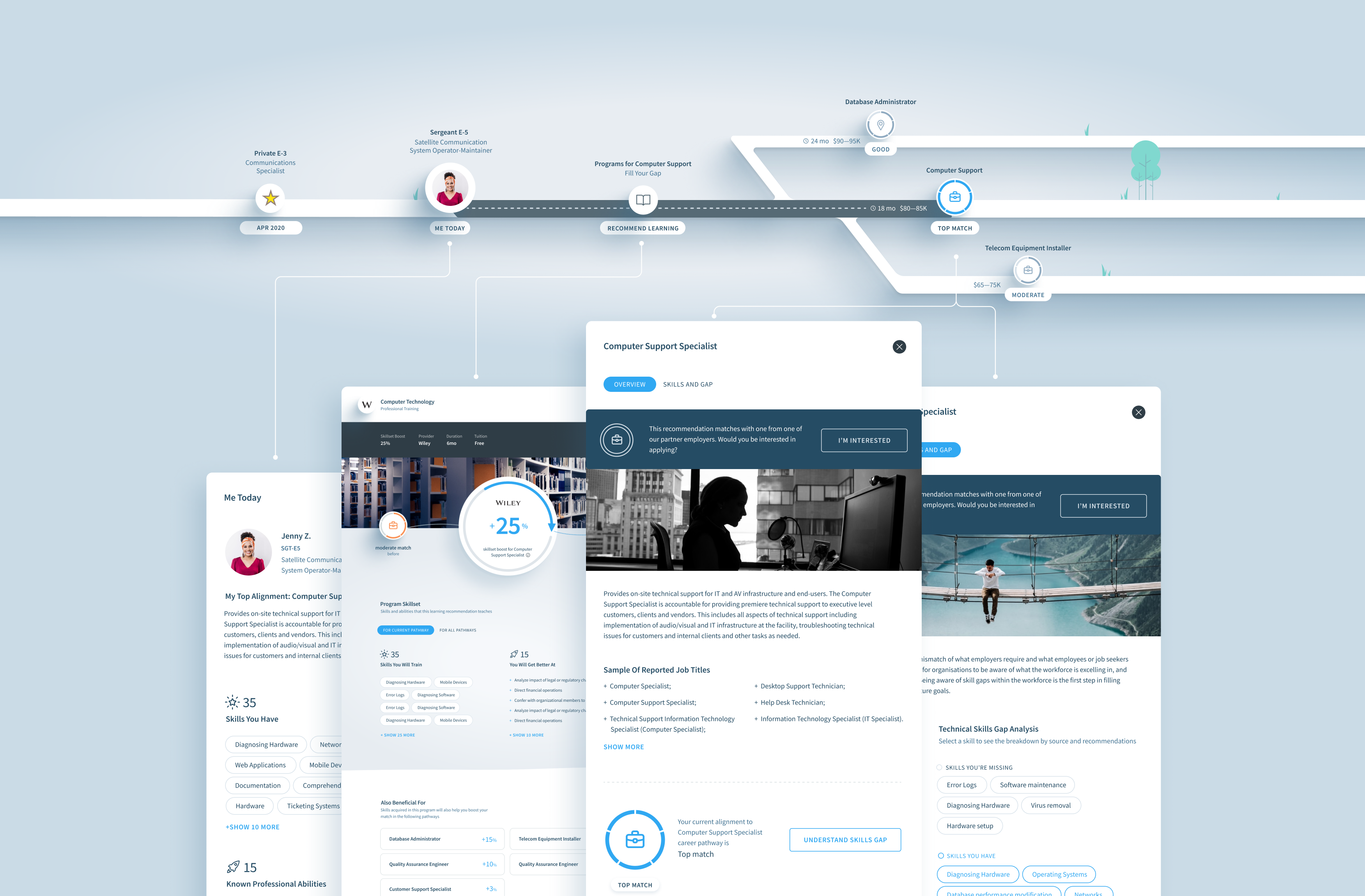
A Web App Highlights Your Skill-Based Opportunities and Bridges Skill Gaps
Impact
Our design launch significantly boosted user engagement and improved soldiers' career navigation during the transition.
1,000+
engaged pilot users after launch
80.3%
satisfied with their career paths Rec
+30%
Salary increase
+25%
Employment rate post-retirement
Approach
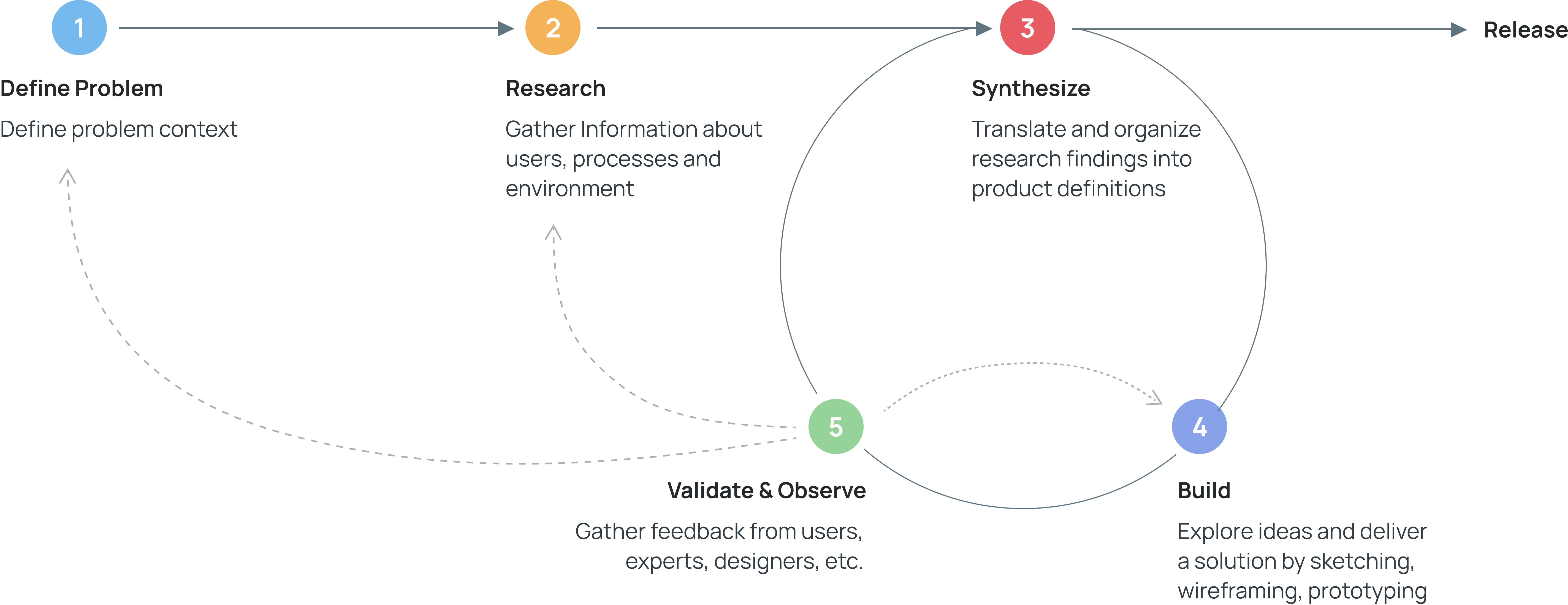
I collaborate with cross-functional teams, quickly develop solutions and continuously iterate post-launch.
Research
Understanding the Context, User, & Market.
200+
user surveys
3
expert interviews
15
user interviews
Context
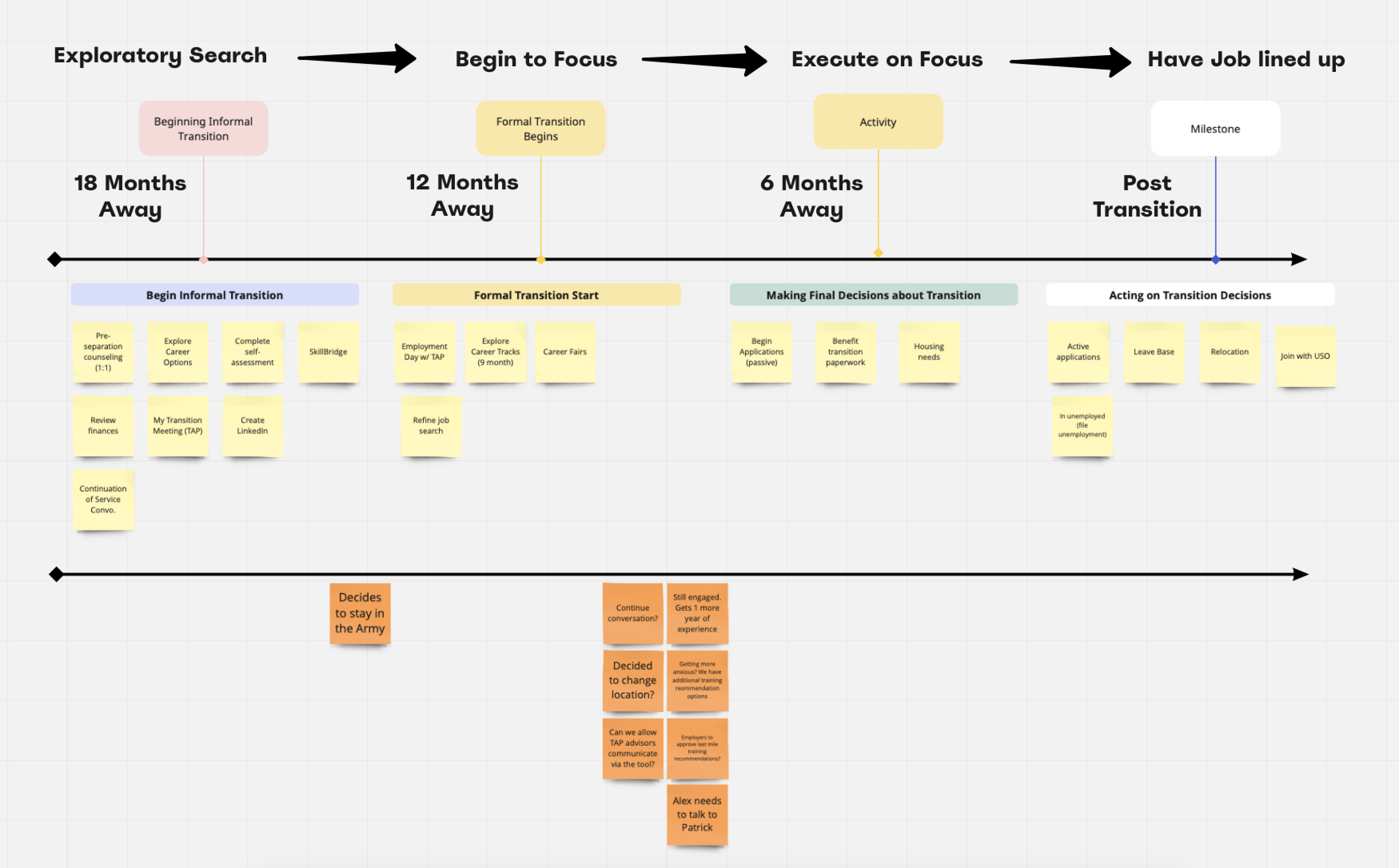
Transitioning soldiers follow a structured 18- to 24-month official transition program.
The transition process involves attending workshops, using resources like the Transition Assistance Program (TAP), and making initial plans for post-military life.
User
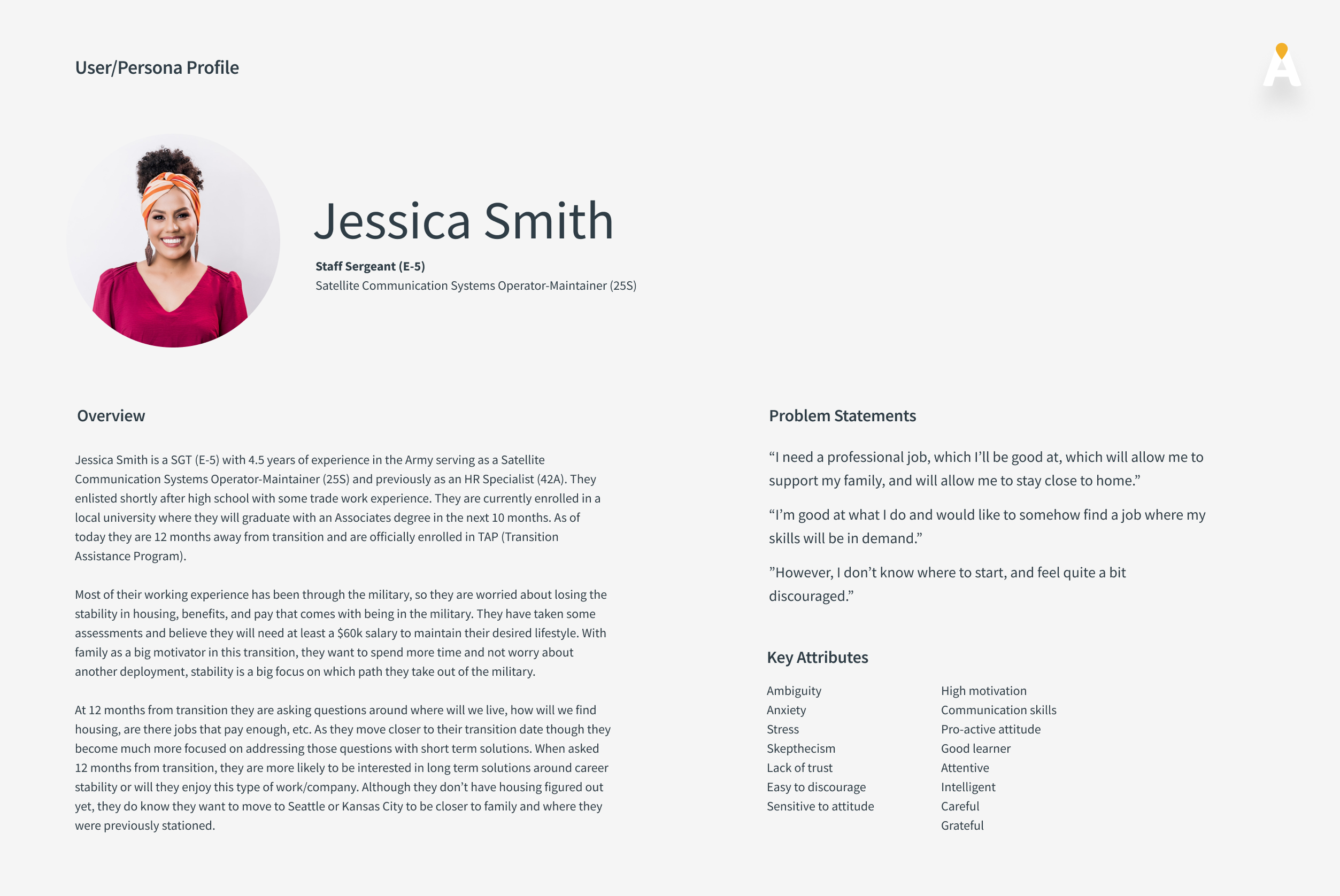
They seek stable jobs aligned with their skills but lack knowledge of civilian roles and the job market.
Common pain points include not knowing which civilian jobs align with their military experience, difficulty in communicating their skills and military experience to non-military audiences, and addressing skill gaps.
Market
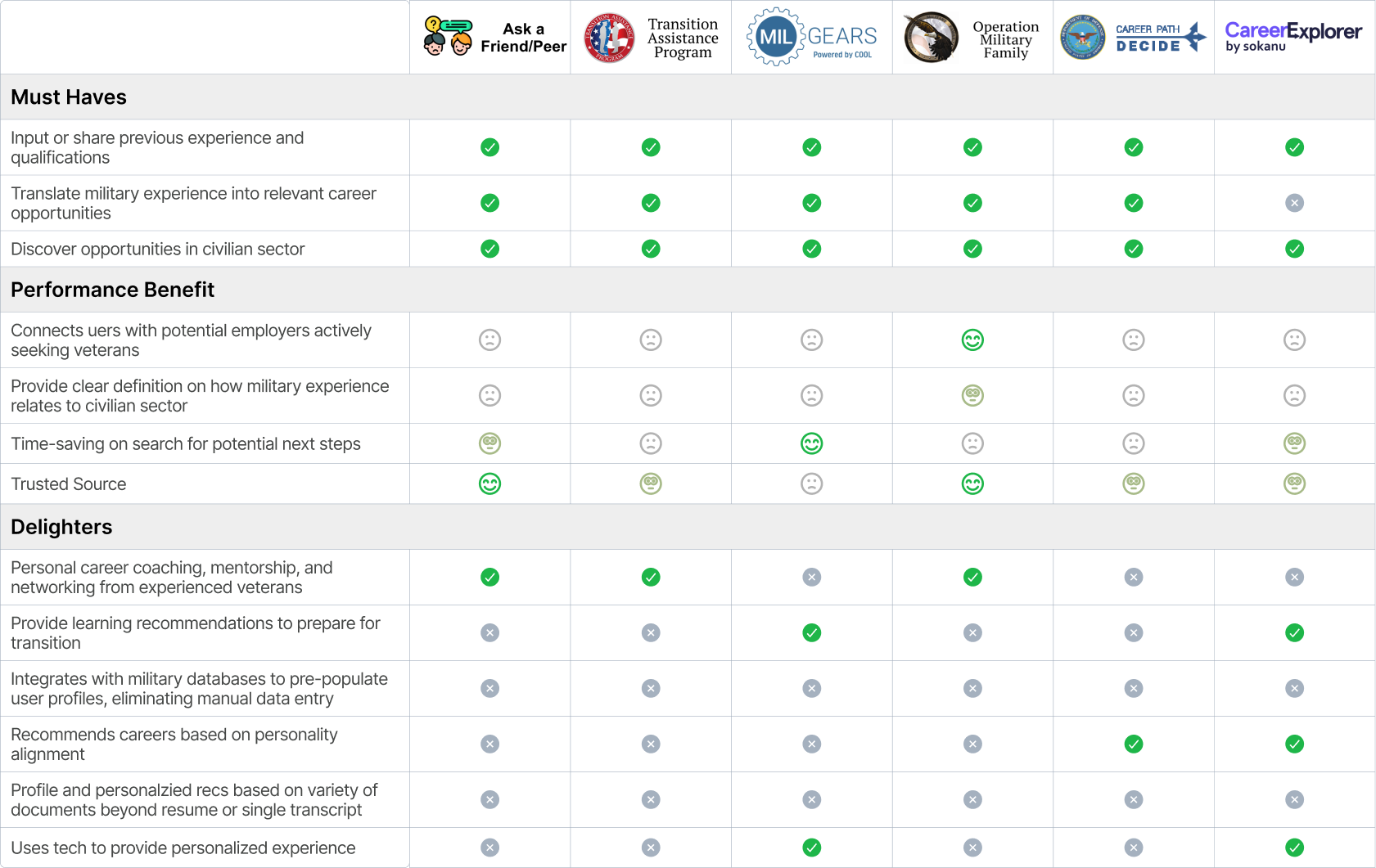
We decided to focus on translate military experience into relevant career opportunities.
We analyzed existing solutions to identify our product-market fit & value proposition. The solutions are not limited to digital products, but also the community and programs.
Reframe the problem
How might we empower transitioning service members connecting their skills and experiences into successful civilian careers and close the skill gaps?
JTBD 1
Understanding the experience and skills.
JTBD 2
Identify and explore the suitable career paths.
JTBD 3
Addressing any skill gaps to navigate a successful transition.
DESIGN PROCESS
Collaborative Brainstorming
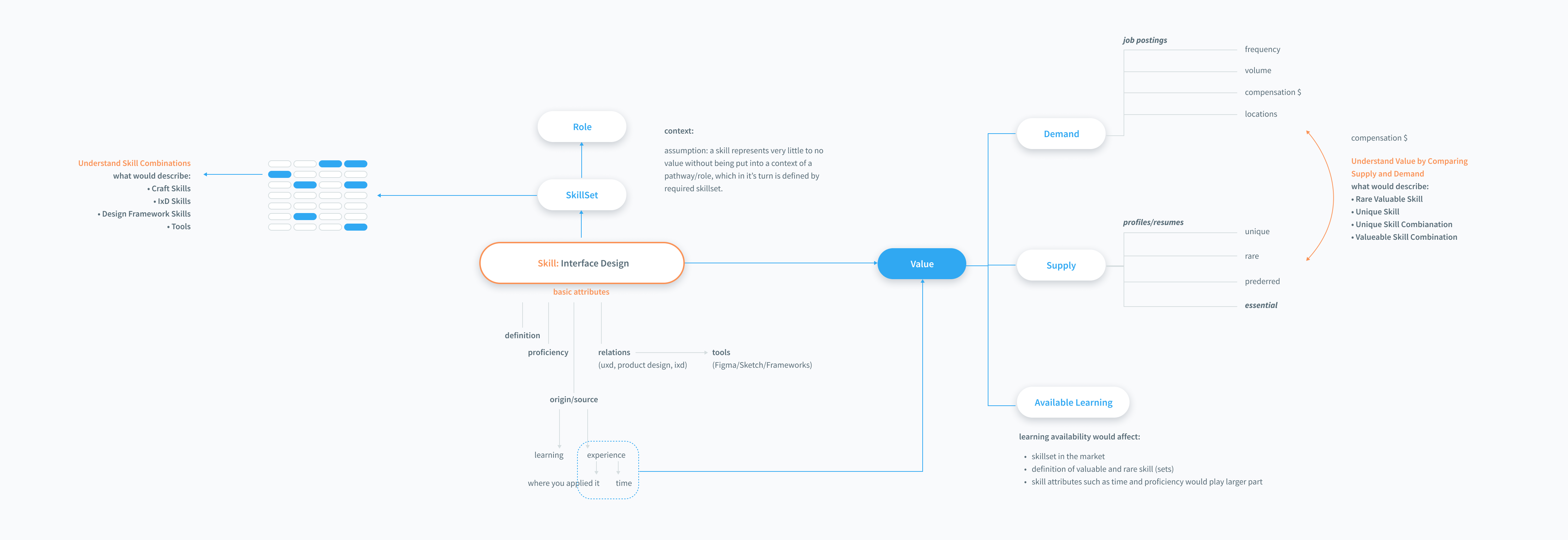
Defining the attributes and visual language used to describe a person's skillset.
I facilitate brainstorming sessions to identify the attributes and context needed to convey the value of each skill and the path to proficiency. And I discussed with the tech team to determine current feasibility and future potential.
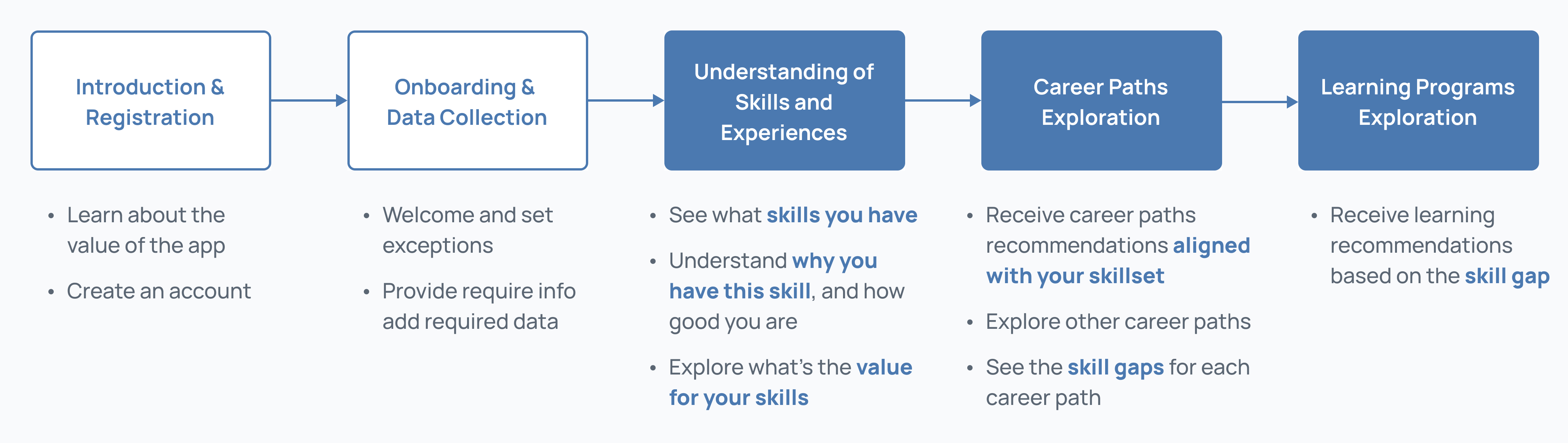
Leverage the skill system to seamlessly connect the user flow across various features.
I mapped the user flow and app map, designing a structure that engages users and integrates seamlessly.
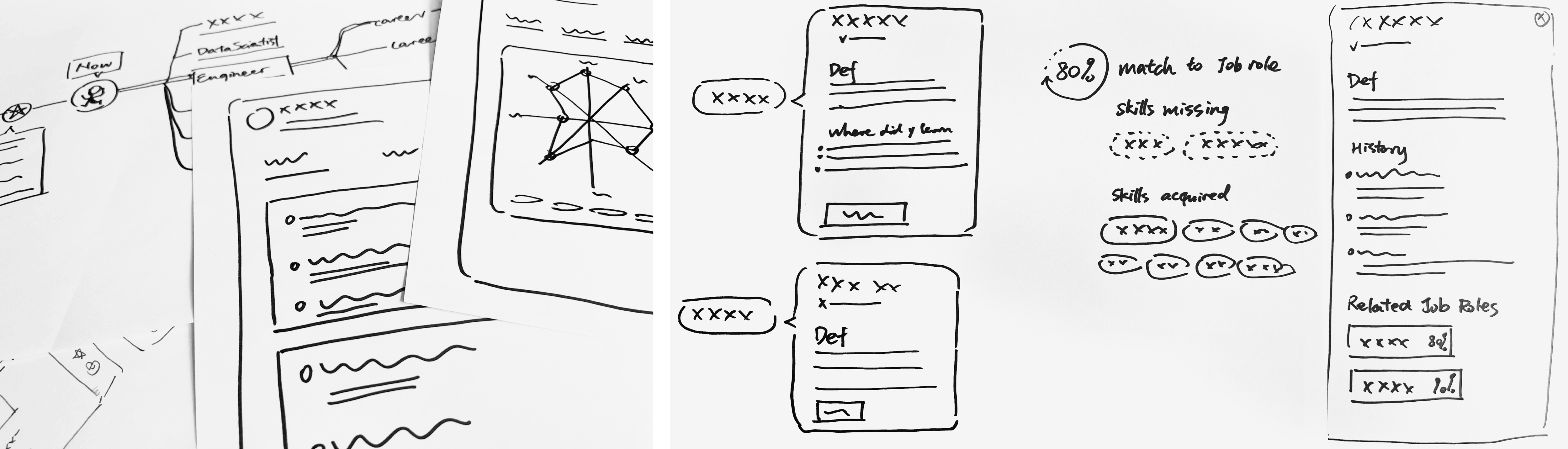
Sketch out the solutions.
I sketched potential solutions and user flows. I used sketches to solidify ideas and draw out how I wanted the interactions to work, and discuss with the PM and principal designer to get feedbacks.
Iterations
Prototyping, findings and Iterations
With limited resources for usability testing, I conducted tests with internal team members unfamiliar with the project to assess clarity and comprehension of the skill system across various features. After launch, we used Amplitude and Hotjar for user insights to drive continuous improvements.
5
Usability Testing
Iteration
Skill-based Profile System
Before
Confusing skills quantification
🫤 "I don't know how to use these skills. It's vague and general." 😡 "It's bit insulting when it says my Leadership skill is low. I do not want to be judged like that."
After
Interactive skills system with career & education context
😀 "I find it's very helpful for drafting my resume." 😊 "This is inspiring! I didn't realize I could do this."
Increase the user satisfaction by 80%
Final Design
Simple And Transparent Experience Structure
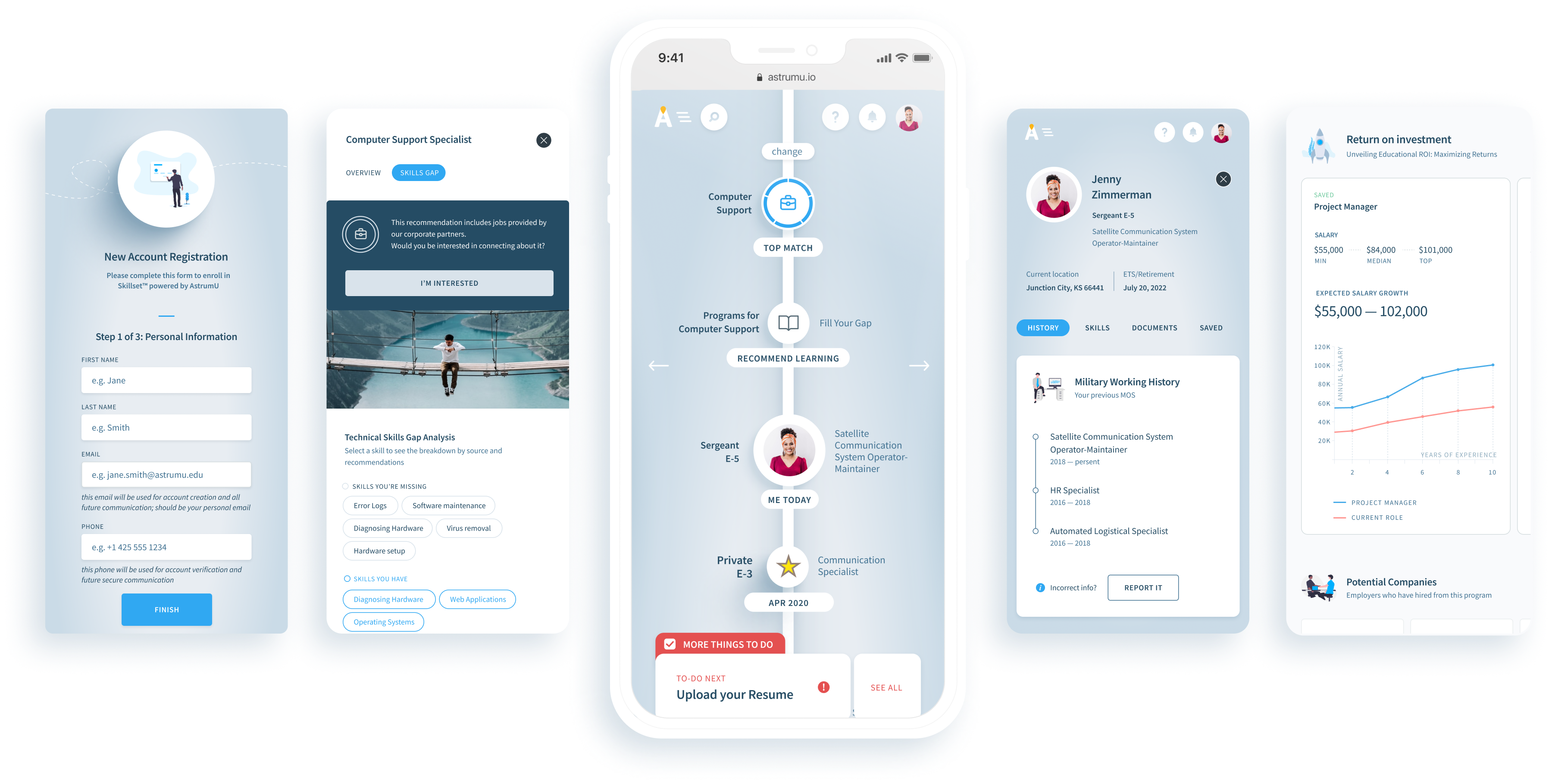
The user navigates through the app in a straightforward structure of four steps, each introduced sequentially with detailed and clear instructions.
Onboarding & Introduction
Data Collection
Measure & Understand Skills
Match & Explore Career Paths
Recommend & Search Education Programs
Feature 01
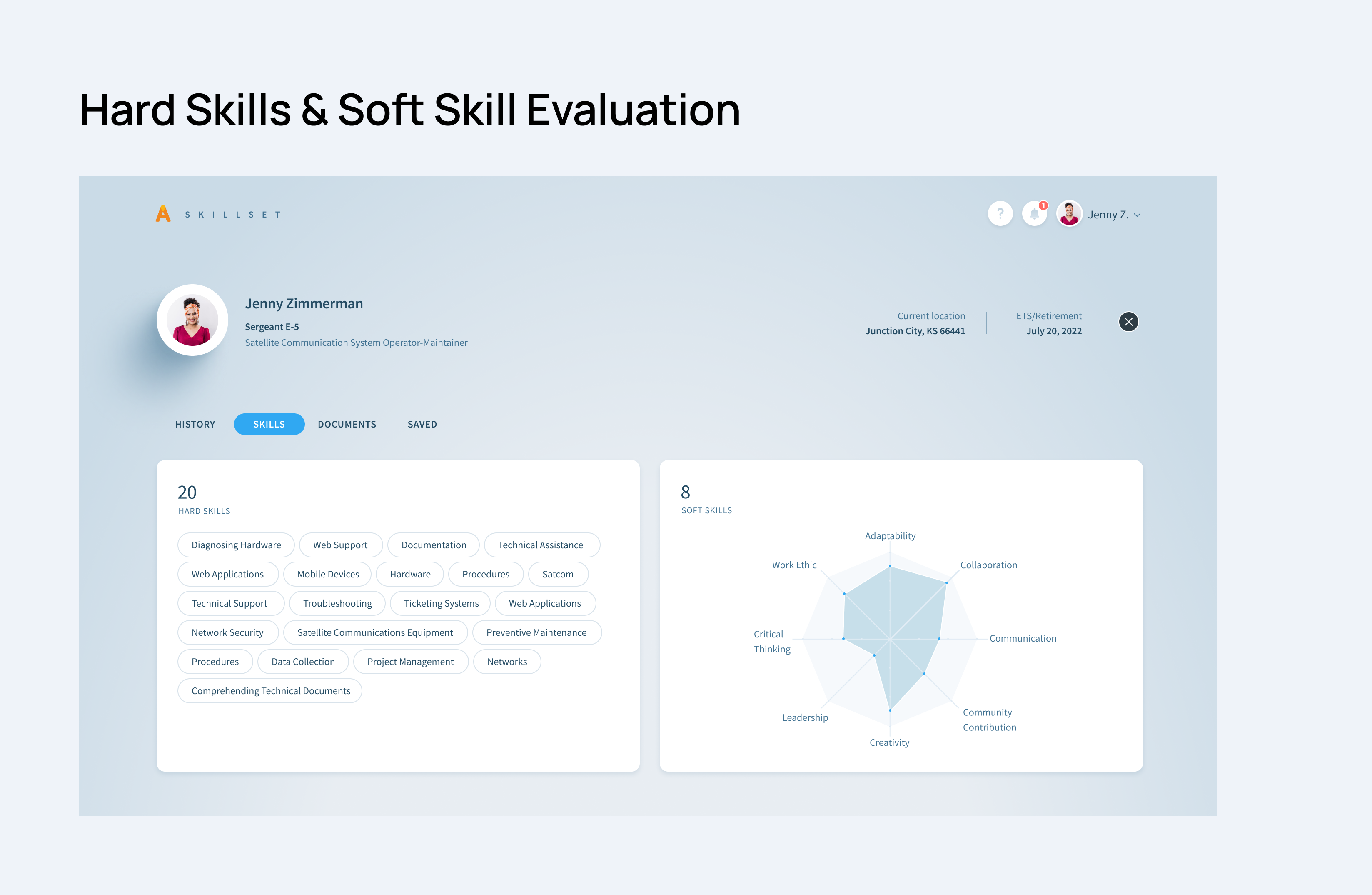
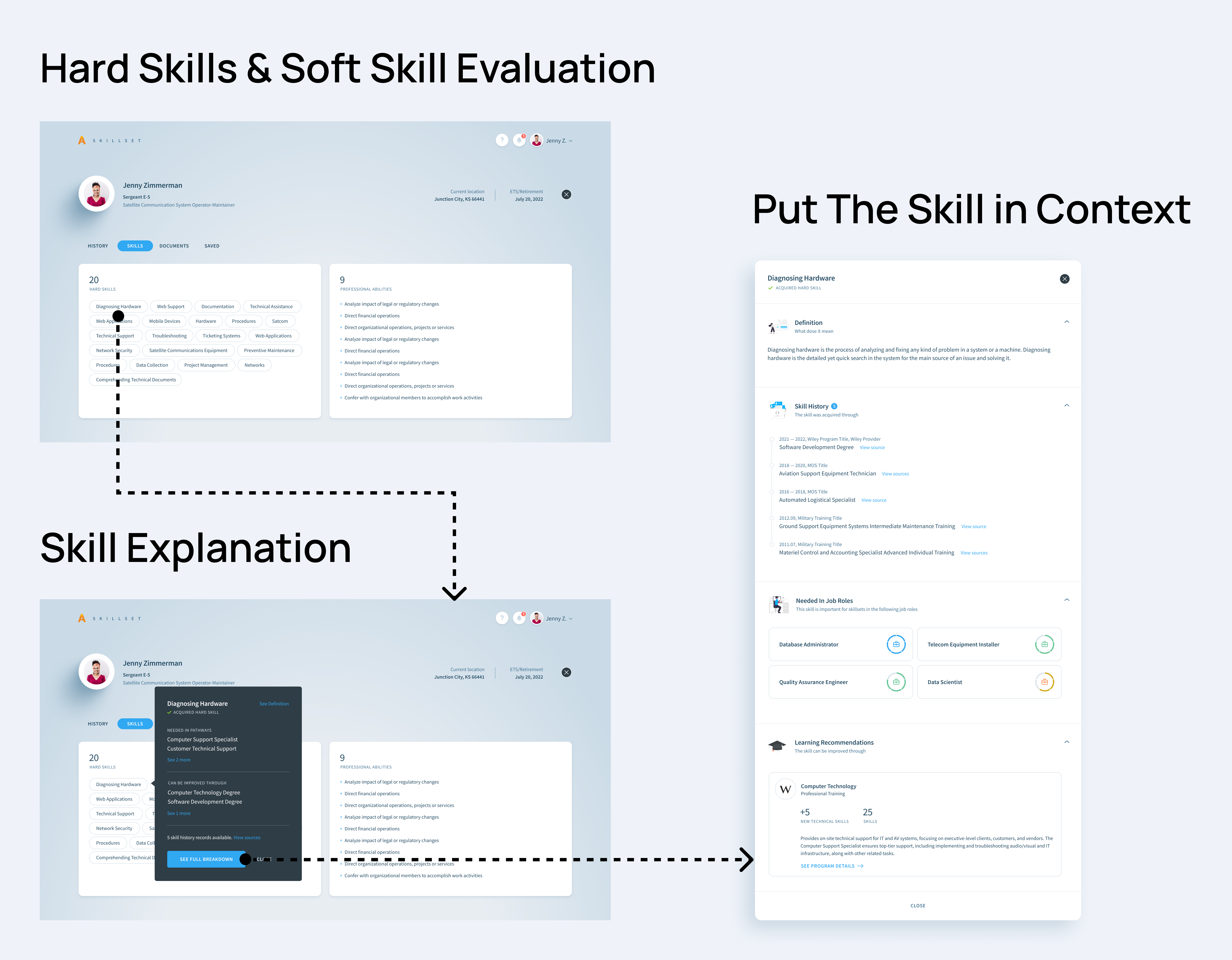
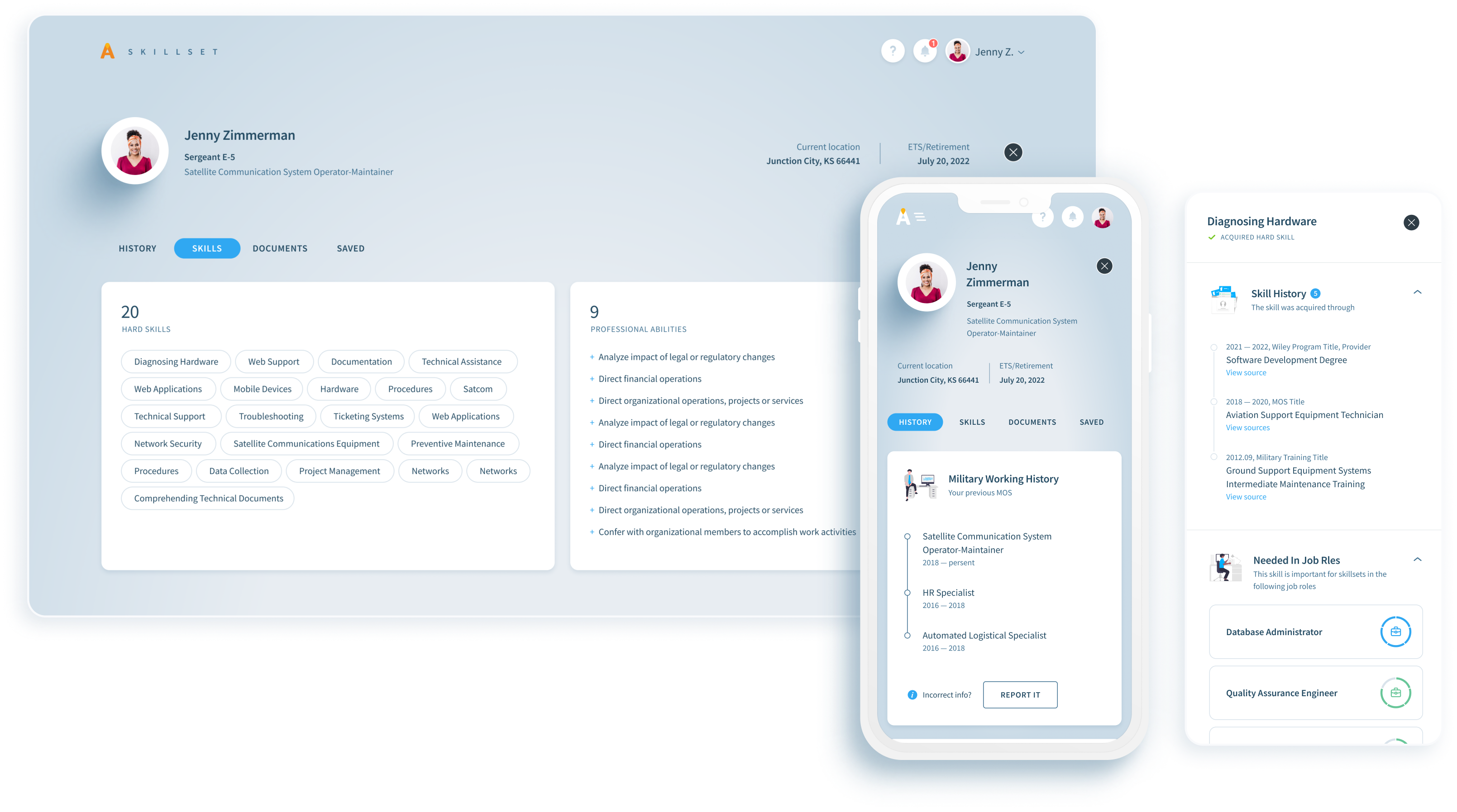
Measure and understand your current skills.
Assess your skills based on your experience, and use a transparent skill system in your profile to understand them better. Learn what each skill means, why you have it, and the related job roles.
Feature 02
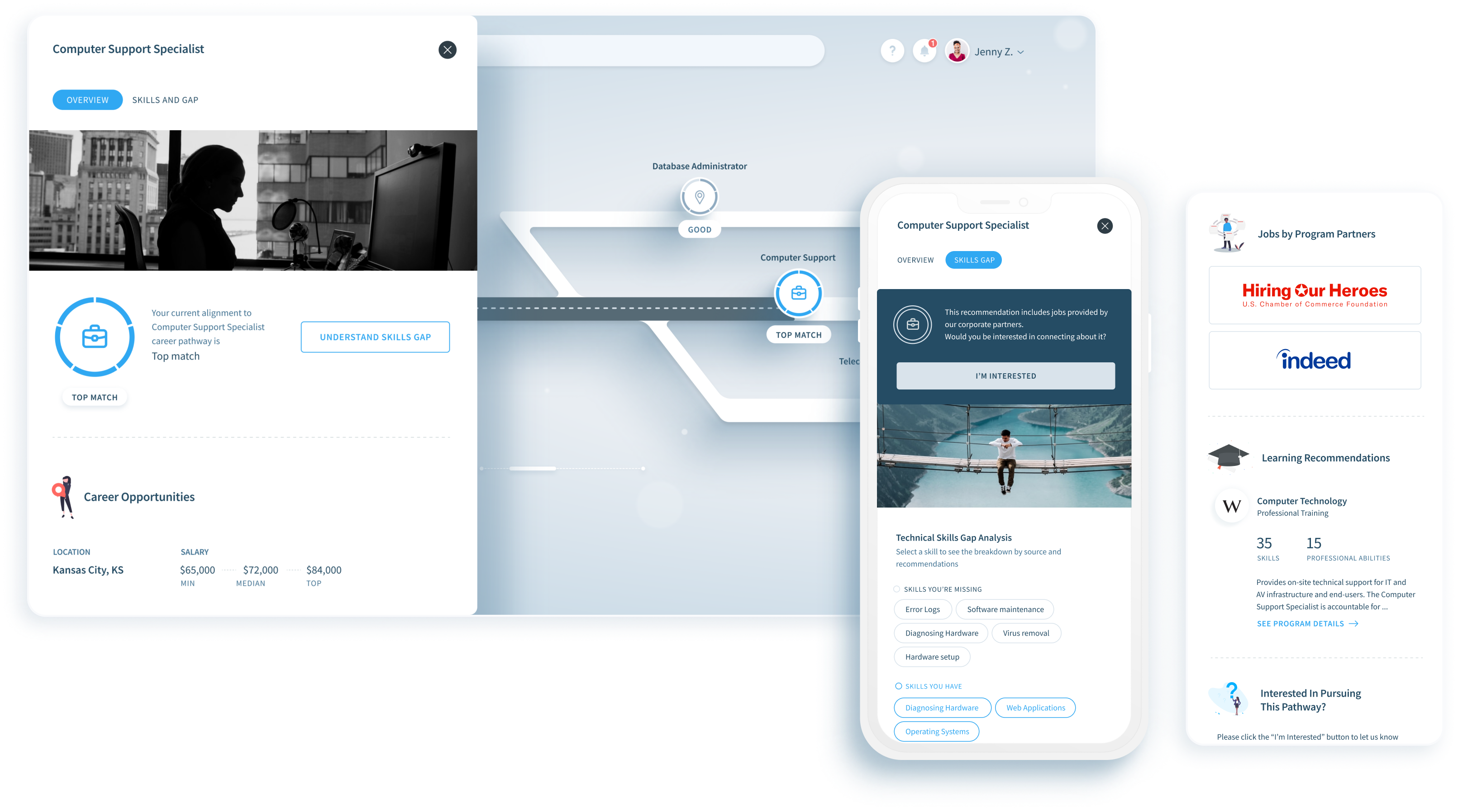
Match you with the suitable career paths based on your skills.
Receive personalized career recommendations based on your skillset, identify skill gaps, and explore potential career paths.
Feature 03
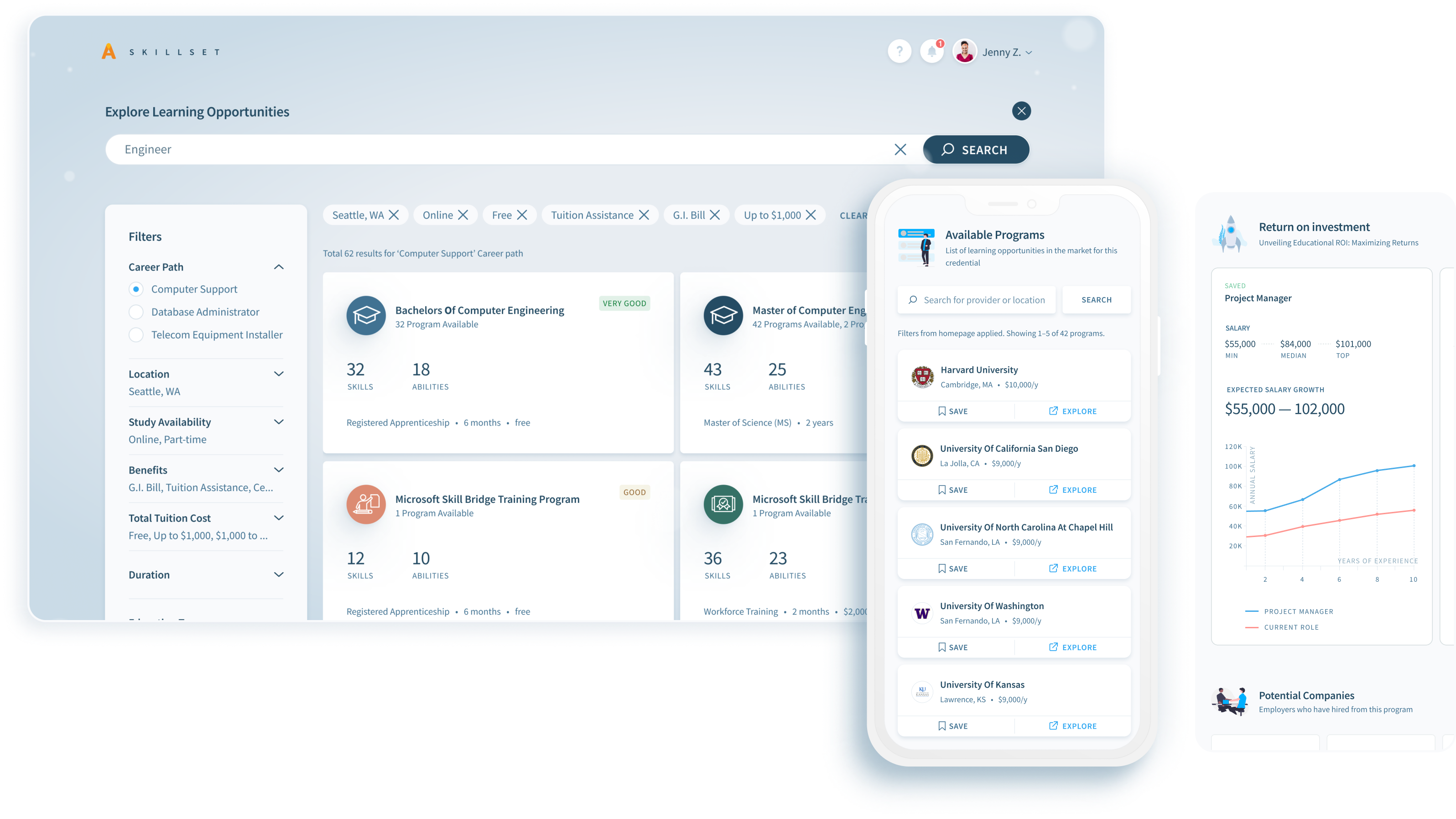
Recommend learning opportunities to help close your skill gaps.
Discover education programs that bridge skill gaps for your desired career path. The education marketplace provides powerful, customizable filters tailored to your preferences across multiple factors.
Next Step
No One Is Left Behind
We're expanding our user group from service members to military spouses and the underemployed workforce. It's an ongoing effort, and we're continuing to work on it!
What I learned
Thriving with Ambiguity in The 0-1 Product Design.
I was facing huge ambiguity spaces in this 0-1 product. I embraced the uncertainty, proactively driving innovation through user-centered research to shape impactful and adaptable product solutions.
Balance user goals, business goals and technical limitations.
As a designer, I focus on delivering value to users while also helping the company understand the importance of user-centered design, ensuring we achieve both user's goals and our business goals together.